Creek Guard
Background
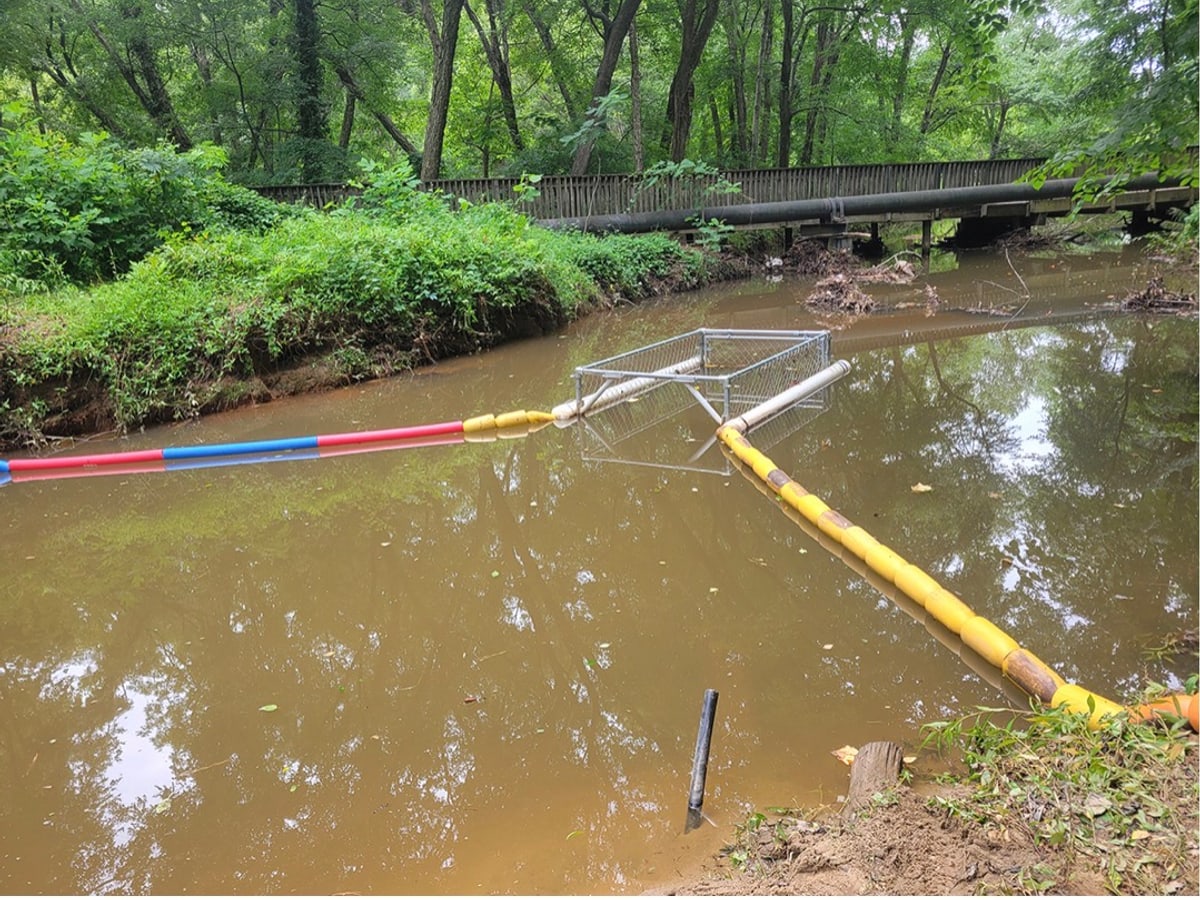
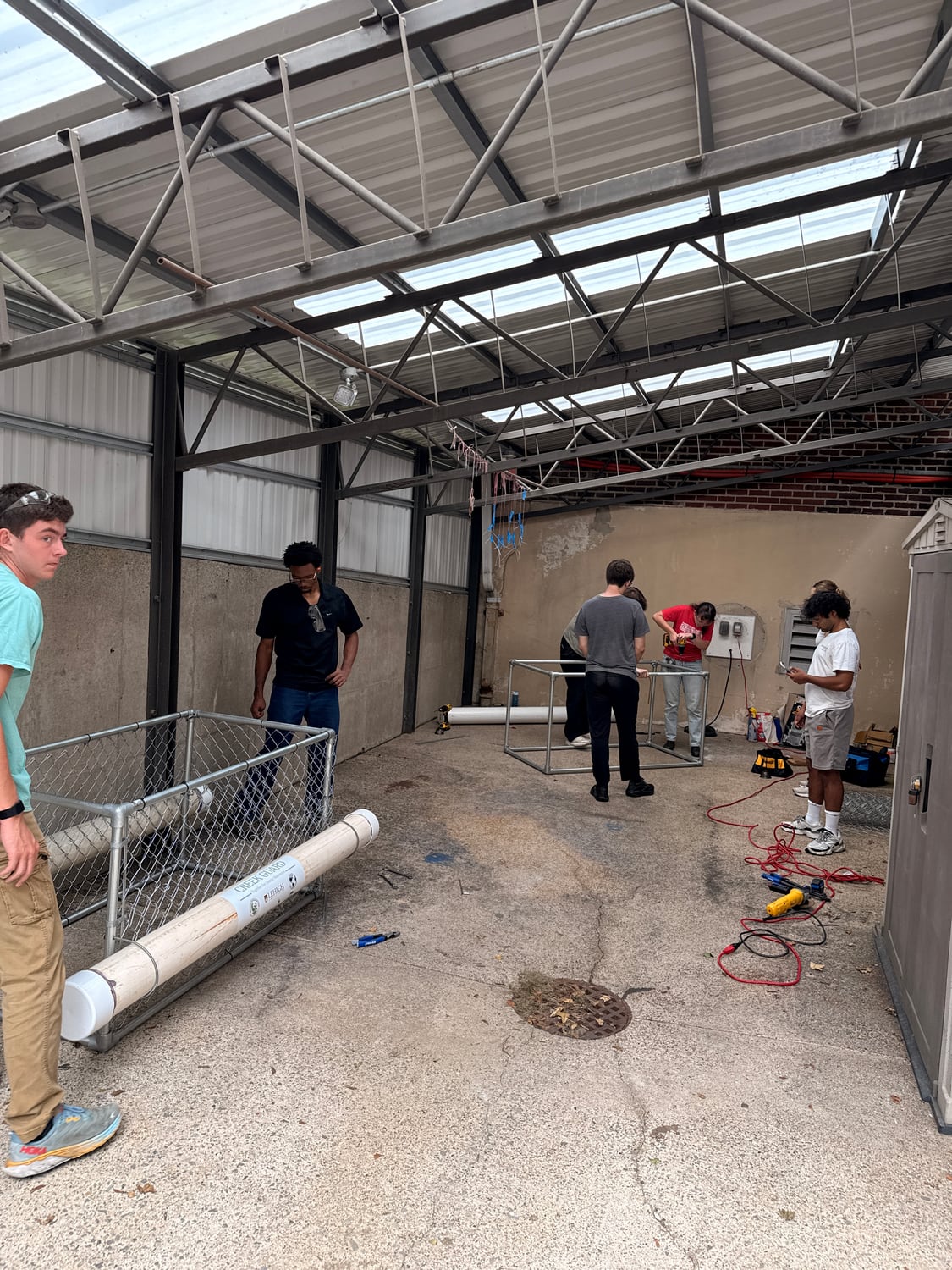
The Creek Guard is a waste collection unit for local streams and rivers. Polluted waterways are a considerable problem around the world, and the goal of this project is to tackle it in our community. Elliot (co-founder of the Sustainable Engineering Club) and I built the first iteration of the Creek Guard. Now we use the project to teach students in our club how to use tools in the workshop, simultaneously training them on how to build and maintain this product. We are collaborating with the University to research the type of trash that recurringly ends up in rivers. By doing so, we can trace common contaminants back to their sources and determine how we can prevent them from ending up in our waterways.
Building the First Prototype
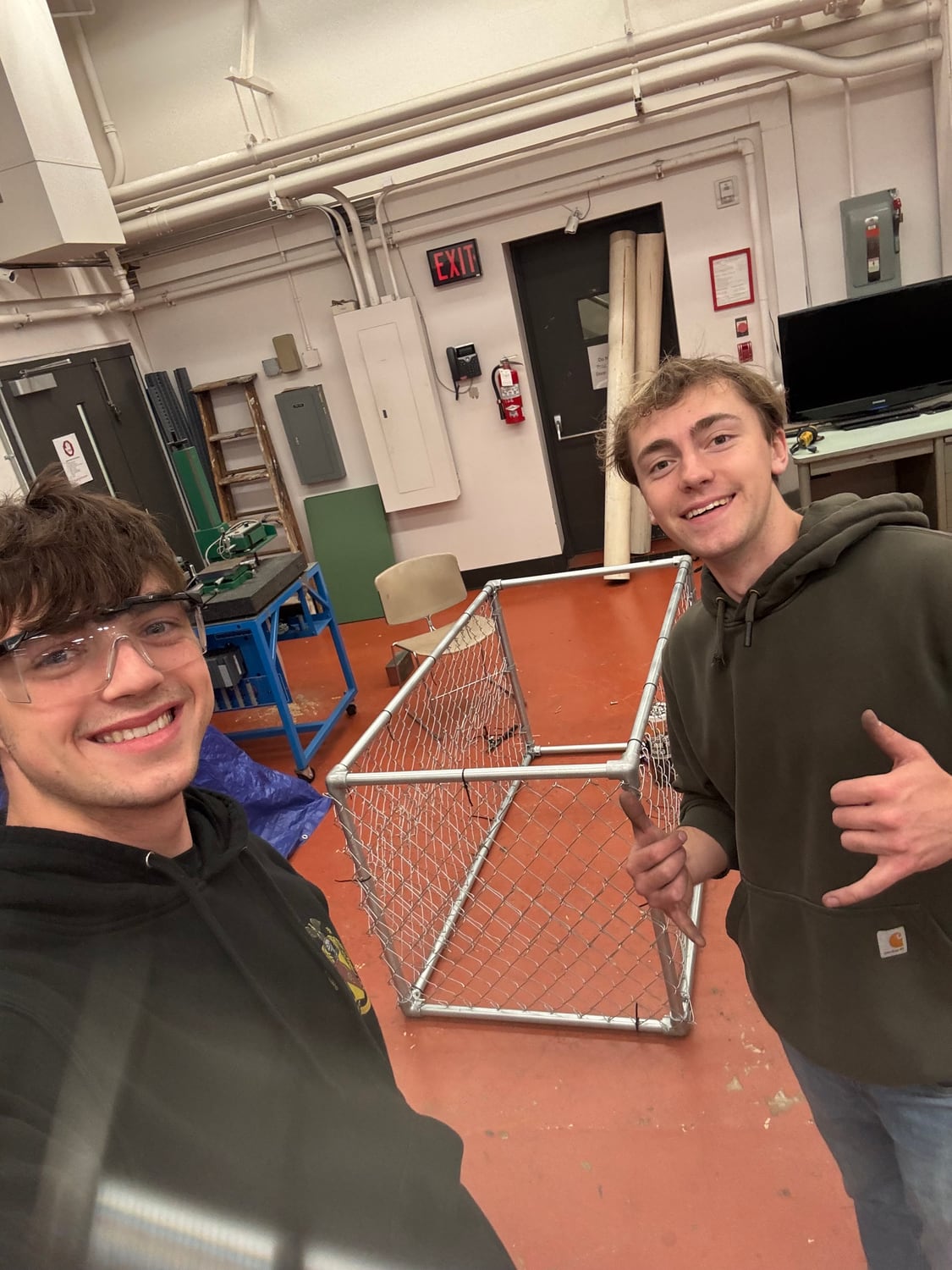
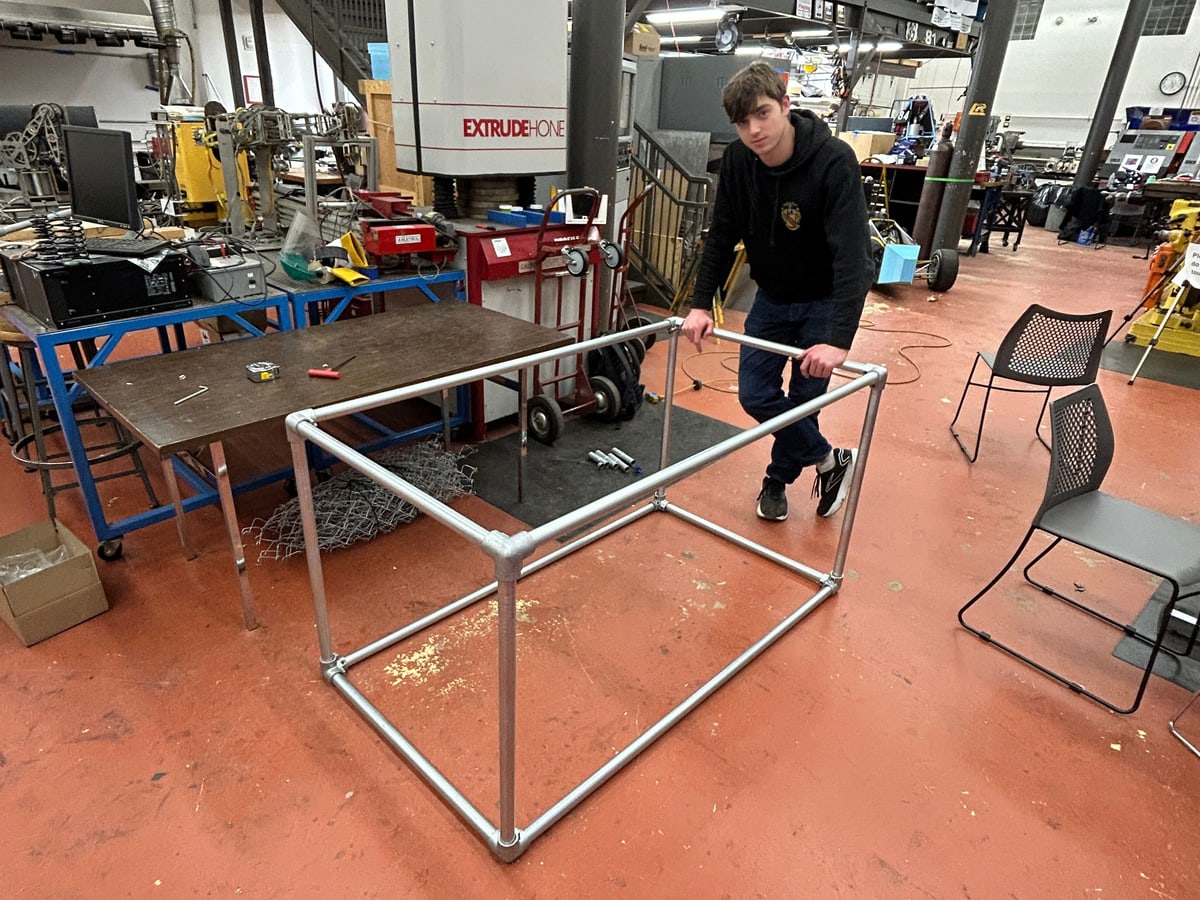
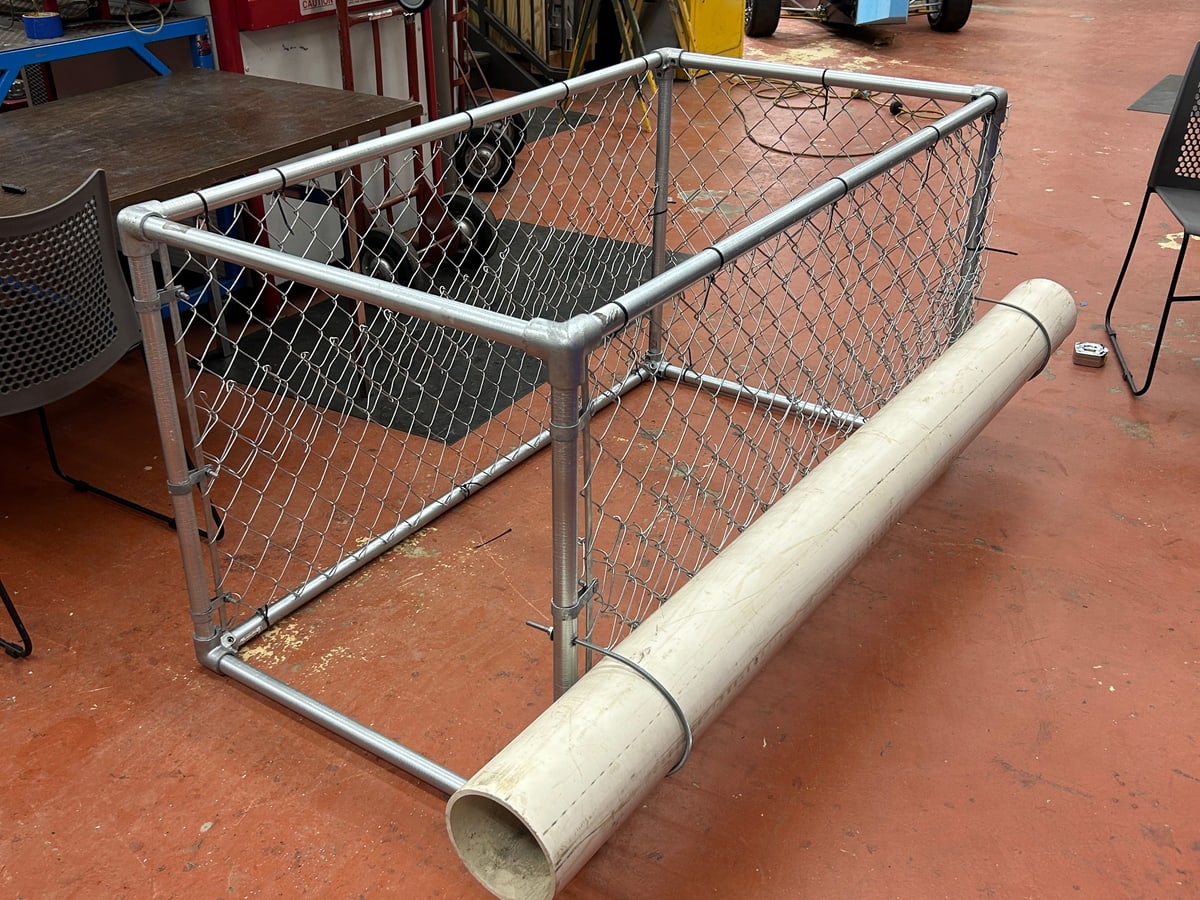
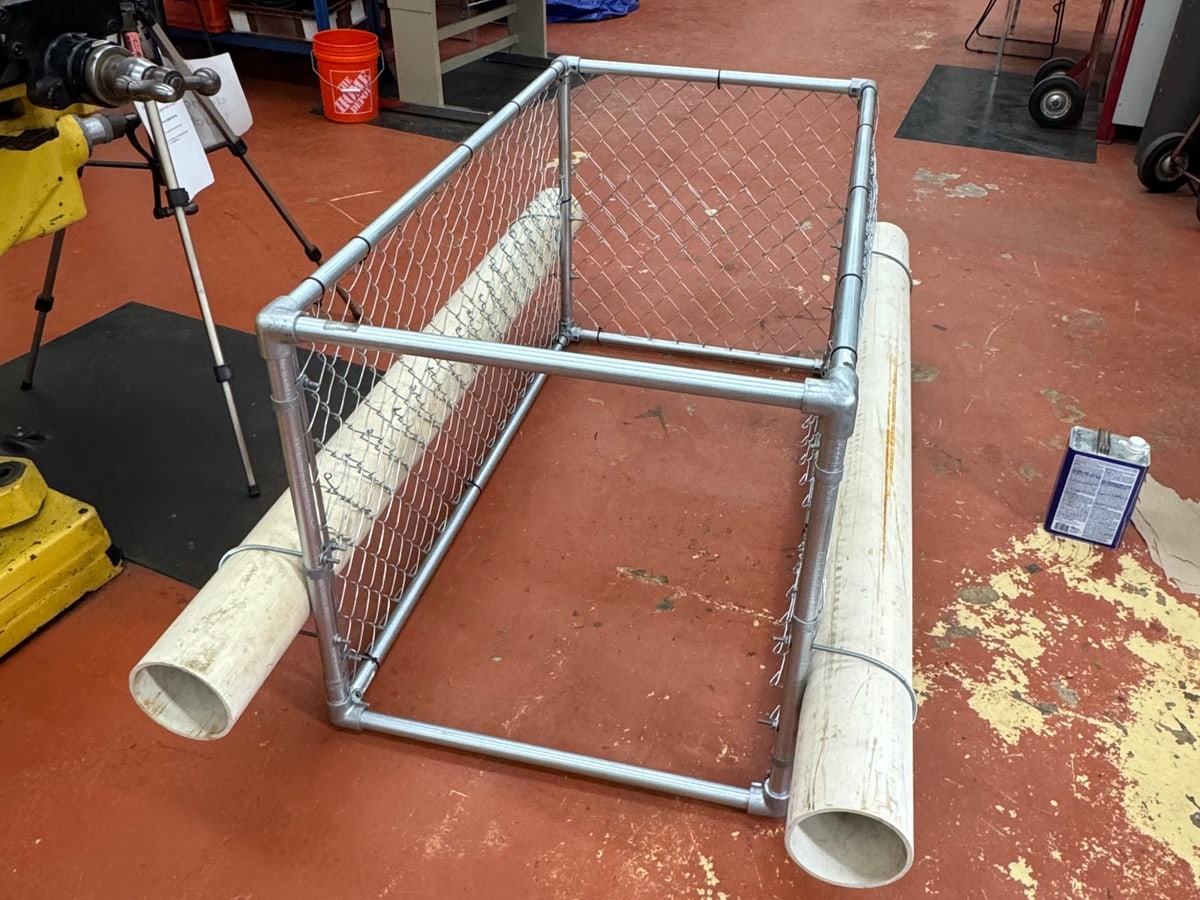
Elliot and I started by cutting and sanding down pieces of metal pipe. We then attached and screwed them together with cast iron elbow pipe connectors to create the frame. Then, we unraveled fence, wrapped it around the outer shell, and tensioned it with tension band clamps and tension bars. Next, we tapped and drilled holes into the sides of the Creek Guard, bent threaded rods and slid the floatation pipe through them. Once the floatation pipes were loosely set, we tightened the rods which locked the pipe in place. To secure this in a river, we plan on tying rope surrounded by a floatation device to the unit so that trash filters into the main collection area. The rope will be attached to posts pinned into the ground to prevent the unit from floating away.
Partnerships
To help us get through the intense permitting and regulation process we have developed relationships with government officials and local watersheds. I helped prepare the slide deck for one of our board members to pitch at Allentown City Council for a $5,000 grant. Through this pitch we developed connections with Judges, the DEP, and Little Lehigh Watersheds. A call with the founder and president of Little Lehigh Watersheds gave us feedback about what rivers we should target and what we needed to prepare for and focus on to get our unit into Allentown.
What’s Ahead
Little Lehigh Watersheds talked to us about the need to design a system that can withstand natural disasters including 100-year floods and hurricanes, be adaptable to different rivers, and be easily maintainable. To prepare for this, we need to:
- Conduct a disaster analysis to determine the peak hydraulic force the system could face in extreme conditions. Then design anchor posts rated above that load.
- Test distributed loads on the fence to make sure that it doesn’t fail when large amounts of trash compile.
- Analyze flow rates of rivers to calculate the angle that our Creek Guard should be positioned so that it does not disturb the ecosystem.
- Ensure that our system is easily maintainable and easily removable so that trained members of our club can replace parts when needed.